11 hr
Wachau Valley Wine & Bike Tour from Vienna
- Expert local guide
- Small group
- Skip-the-line access
- Free cancellation
Wachau Valley Wine Tasting Bike Tour — Cycle & Sip Through UNESCO Vineyards
Pedal terraced slopes above the Danube, taste crisp whites in family cellars
Compare fares, pick the fit — all bookings are mobile-voucher and eligible for free cancellation where shown.
11 hr
9 hr
8 hr 30 min
Choosing a wachau valley wine tasting bike tour requires deciding between standardized group excursions and more personalized, flexible rental arrangements. These wachau valley wine tasting bike tour tours allow you to explore the UNESCO heritage region and its river landmarks at your own pace.
| Guided Group Tour Structured Day Trip |
Top pick Self-Guided Rental Flexible Independent Ride |
|
|---|---|---|
| Duration | Full day (approx. 9-11 hours) | User defined (customizable) |
| Transport included | Train to/from Vienna | Not included |
| Equipment | Standard bike included | Bike rental required |
| Wine tastings | Pre-booked cellar visits | Visit at own preference |
| Best for | First-timers seeking history | Independent explorers and budget-conscious |
| See tickets & prices |
Verdict: For the most seamless experience with local vintner insights, we recommend the Guided Group Tour for your wachau valley wine tasting bike tour tickets.
Worth it for wine lovers and active travelers
A wachau valley wine tasting bike tour delivers genuine value if you want to combine cycling through terraced vineyards with cellar visits and local Grüner Veltliner tastings. The Wachau Valley Wine & Bike Tour from Vienna (full-day option) pairs guided cycling along the Danube with stops at family-run wineries, while the Vienna Wine Tasting & E-Bike Adventure to Klosterneuburg offers a shorter half-day format. You're paying for curated access to producers who rarely appear on tourist maps, plus bike rental and transport from Vienna. The region itself is free to explore, but organized tours solve logistics—routing between Dürnstein, Weißenkirchen, and Spitz requires local knowledge, and tasting-room appointments are easier with a guide. Skip it if you prefer urban sightseeing or don't drink wine; the Danube cruise alternatives cover similar scenery without the physical effort. For cyclists who want vineyard immersion beyond generic wachau valley wine tasting bike tour tours, it's the most efficient way to taste premium Austrian wines while covering 20–30 km of valley trails.
Bottom line: Book a wachau valley wine tasting bike tour if you want expert-led vineyard access paired with scenic cycling—it's the only format that efficiently combines both.
They complement each other; most visitors who do both call the Wachau Valley wine tasting bike tour the more active, immersive way to explore local vineyards, while the river cruise is the more relaxing, scenic alternative.
|
Top pick Wachau Valley Bike Tour |
Danube River Cruise | |
|---|---|---|
| Pace | Active and self-paced | Leisurely and guided |
| Physical Intensity | Moderate cycling | Low (seated) |
| Wine Access | Direct vineyard visits | On-board tasting events |
| Scenery | Eye-level valley views | Elevated panoramic perspectives |
| Flexibility | High (stop anywhere) | Fixed schedule and stops |
| Group Size | Small group or solo | Large group or vessel-based |
| Seasonal Availability | Spring through autumn | Spring through autumn |
| See tickets & prices |
Verdict: Choose the wachau valley wine tasting bike tour if you prefer an intimate, high-engagement experience among the vines, whereas the river cruise is ideal for those seeking a passive, stress-free overview of the wachau valley wine tasting bike tour tickets landscape.
Hand-picked experiences loved by thousands of travelers
10 hours
Free Cancellation
Explore Austria's stunning Danube Valley with visits to three historic towns and a complimentary tasting
4 hours
Free Cancellation
Pedal along the Danube to a historic abbey, sample Austrian wines, and explore scenic riverside trails
5 hours
Free Cancellation
Sail through a UNESCO heritage landscape from Krems to Melk, savoring regional cuisine aboard a renovated vessel
12 hours
Free Cancellation
Experience Austria's iconic alpine village with round-trip transport, castle visit, and ample exploration time
13 hours
Free Cancellation
Small-group minivan adventure through Austria's UNESCO vineyards, baroque monasteries, and alpine lakeside villages
12 hours
Free Cancellation
Journey to a UNESCO lakeside gem, stop at Melk Abbey, then explore Vienna's landmarks at your own pace.
8 hours
Free Cancellation
Full-day private excursion through Austria's wine country with abbey visit and tasting opportunities
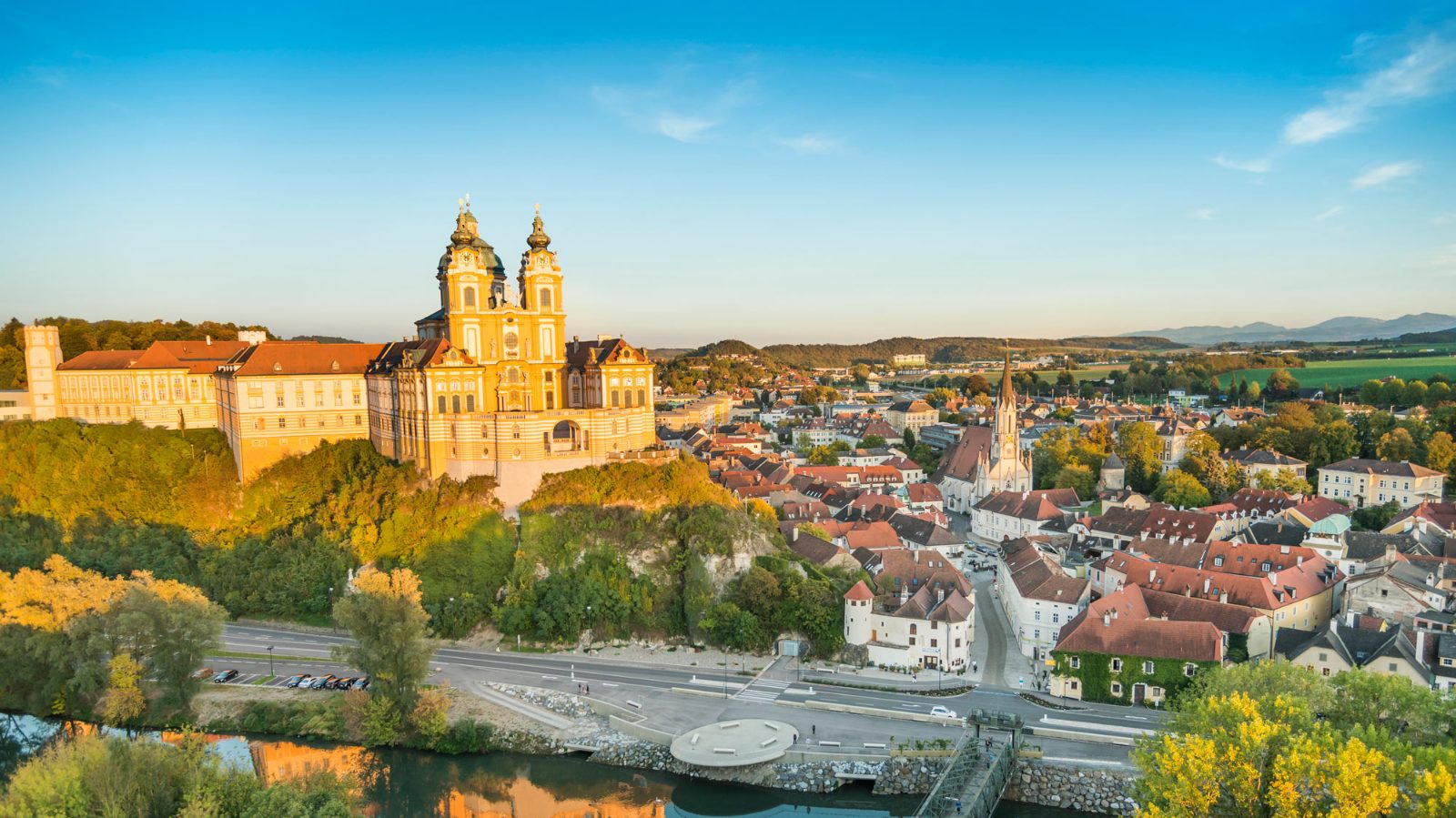
Depart from the abbey vicinity
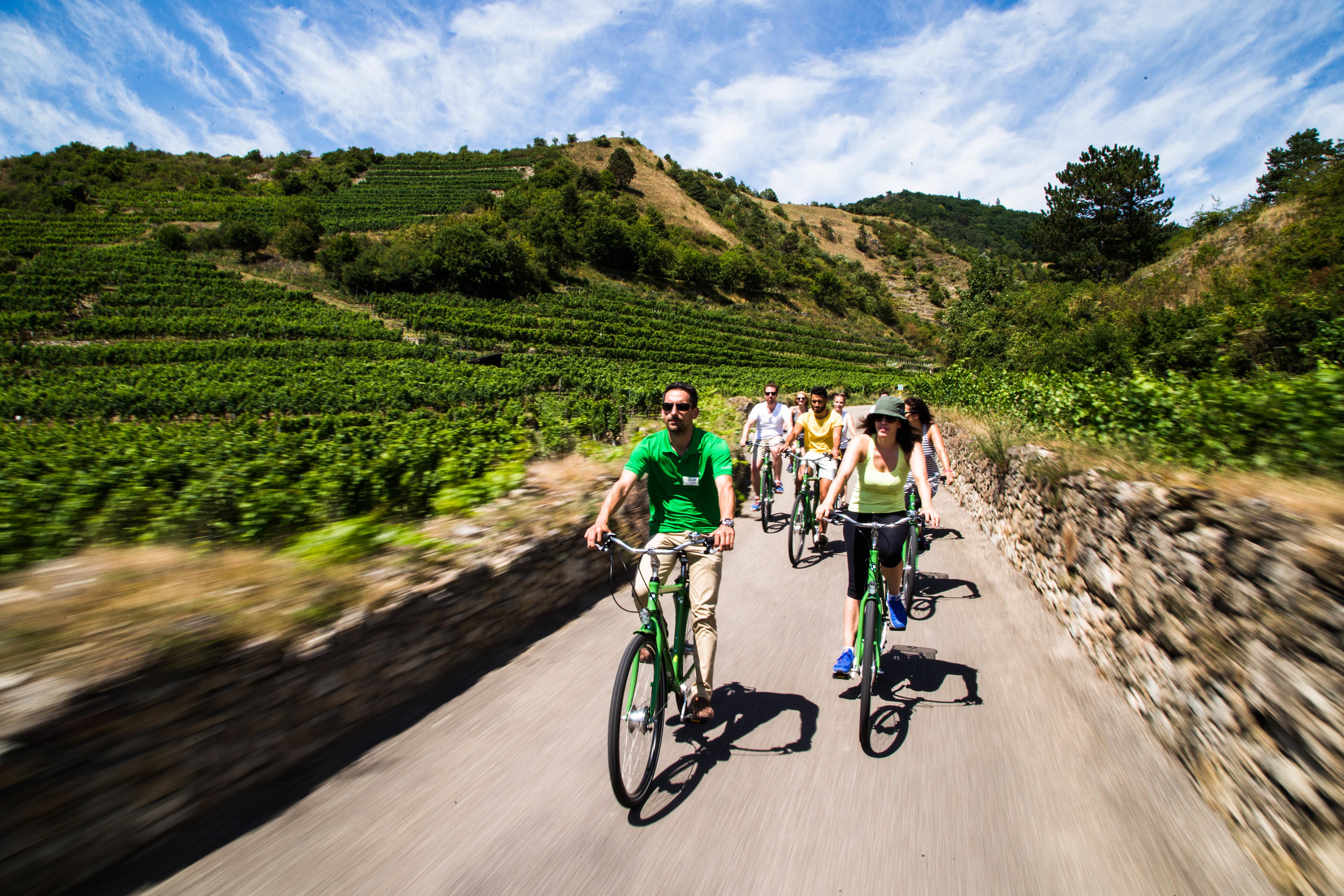
Ride through historic wine towns
Sample local Gruner Veltliner
Conclude near Krems riverfront
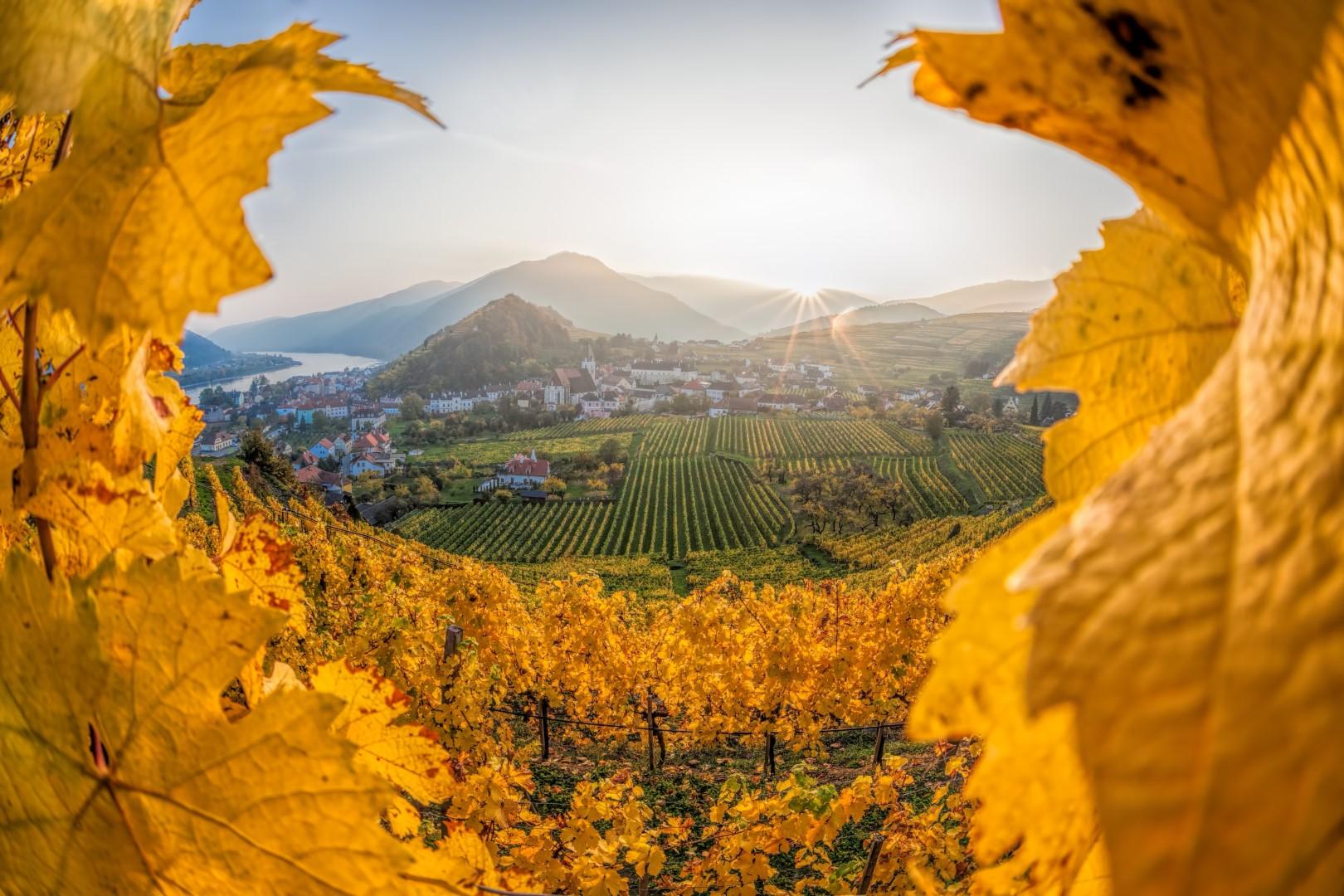
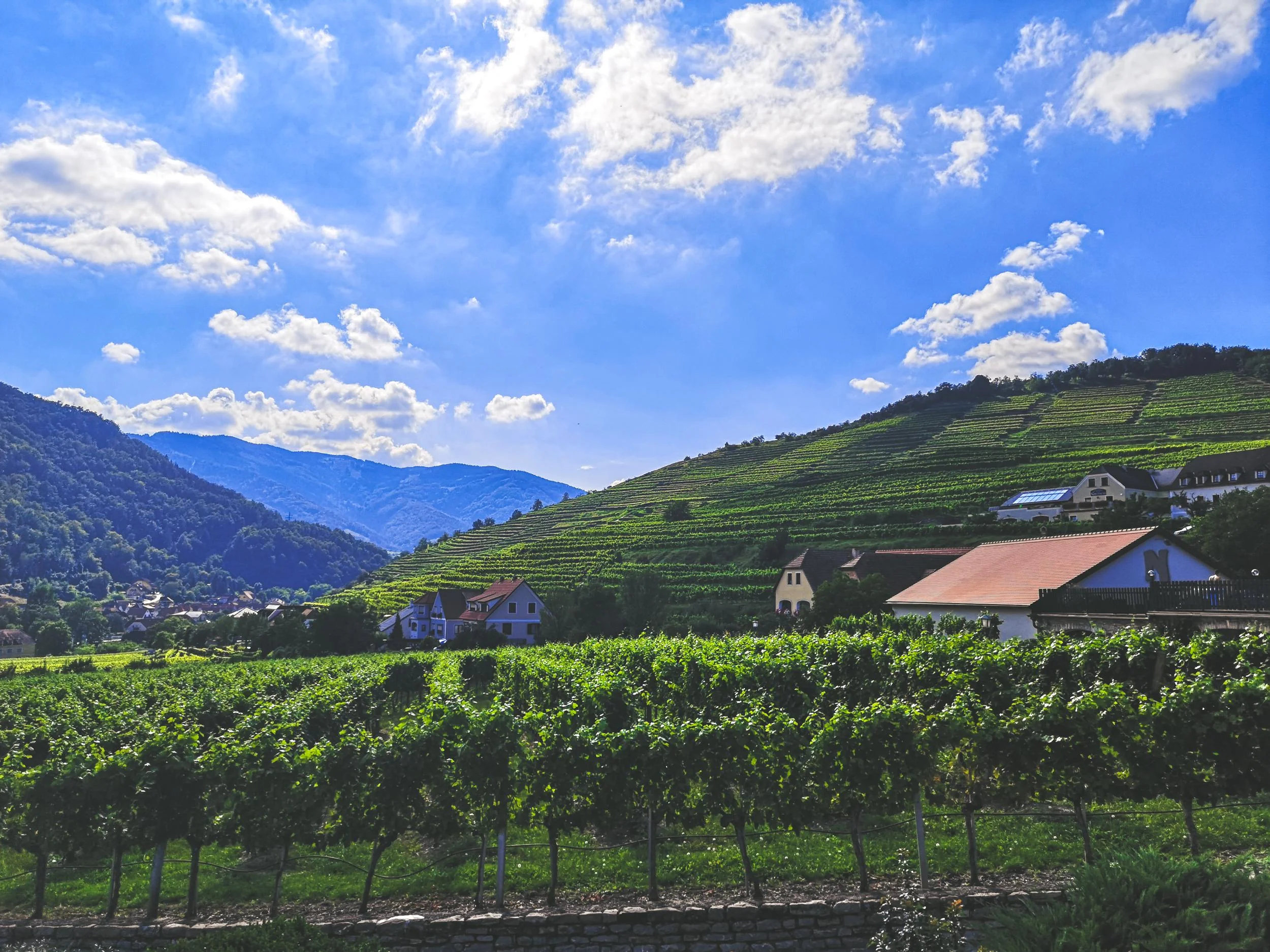
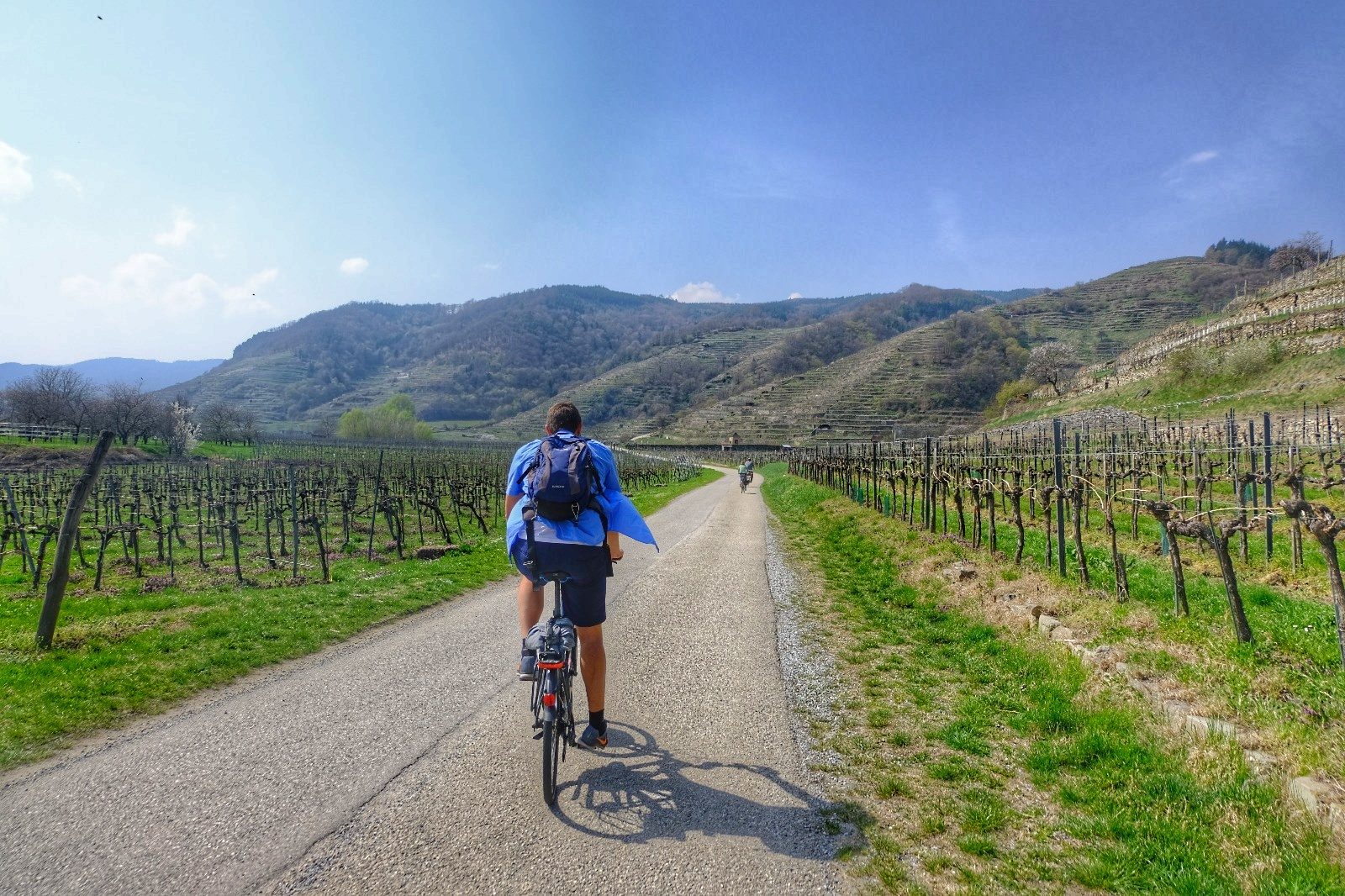
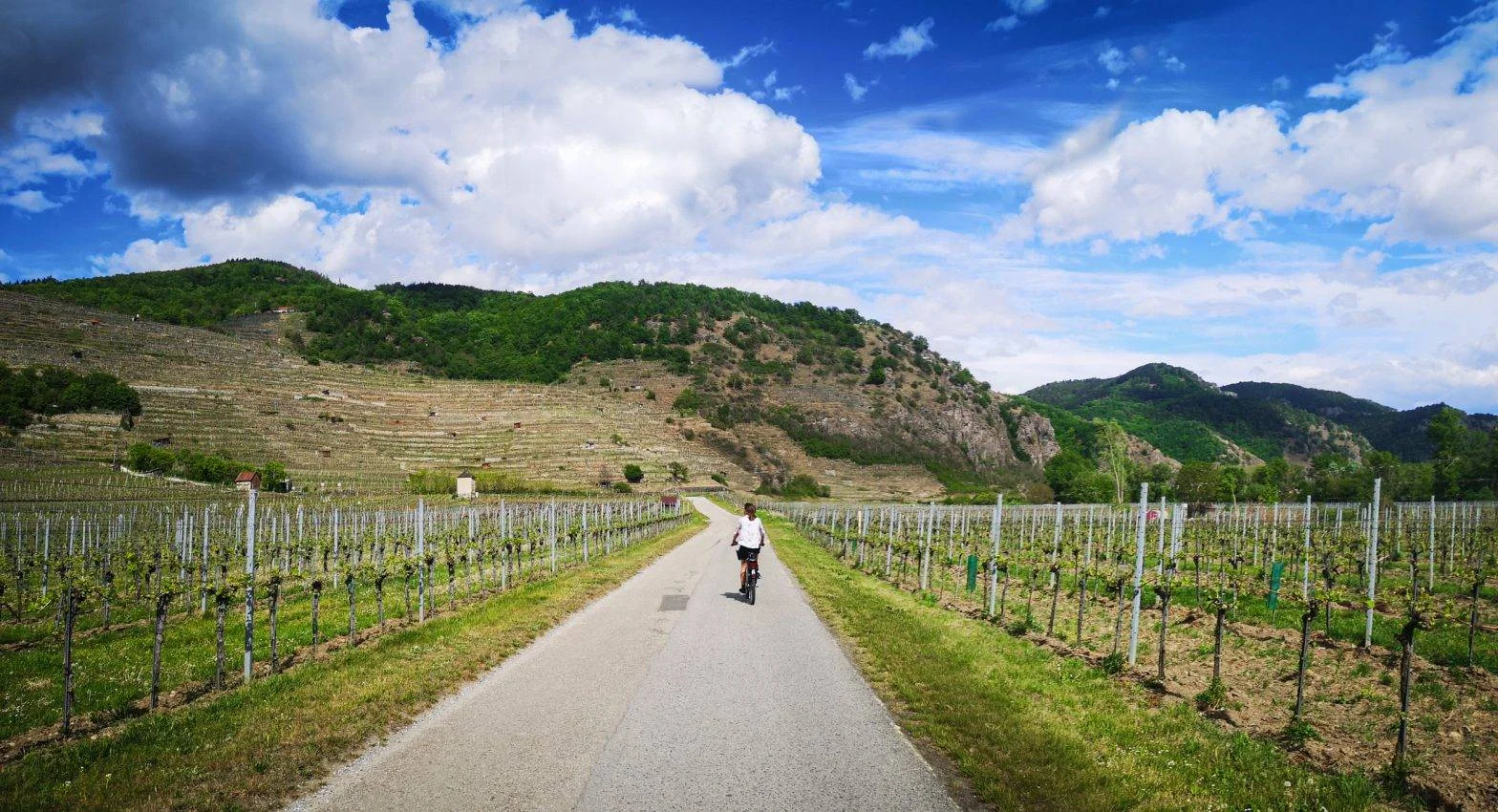
Rows of world-renowned grapes stretch across steep terraced hillsides. These slopes produce the region's signature white wine varieties.
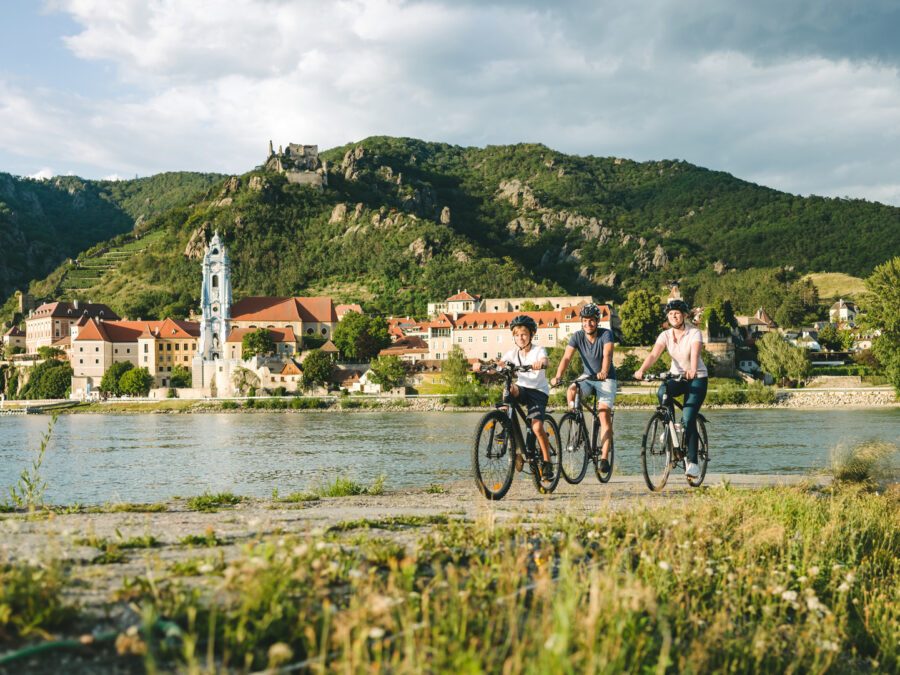
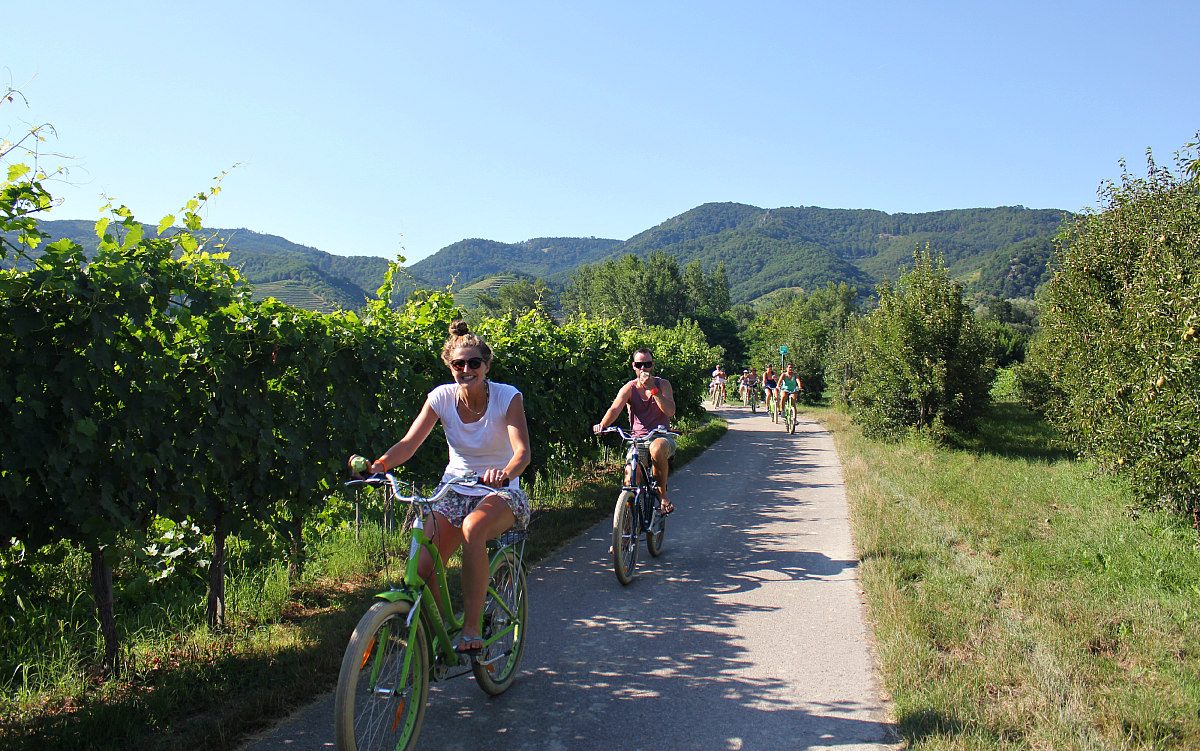
The cycling path follows the winding river for several kilometers. It offers consistent flat terrain for every wachau valley wine tasting bike tour.
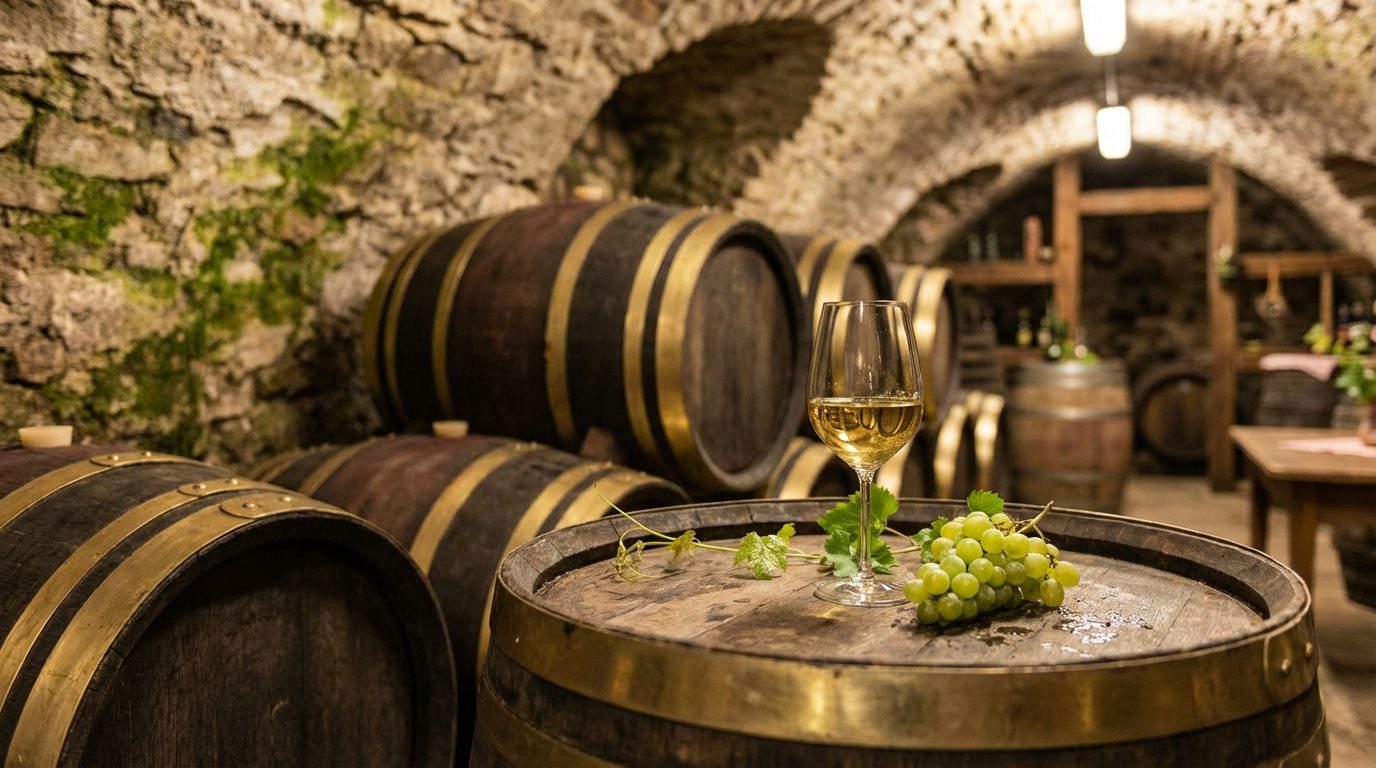
These traditional wine taverns provide a space to sample local produce. Many date back several centuries in their construction.
Spring blossoms transform the landscape into a white and pink spectacle. These trees are as iconic as the vines themselves.
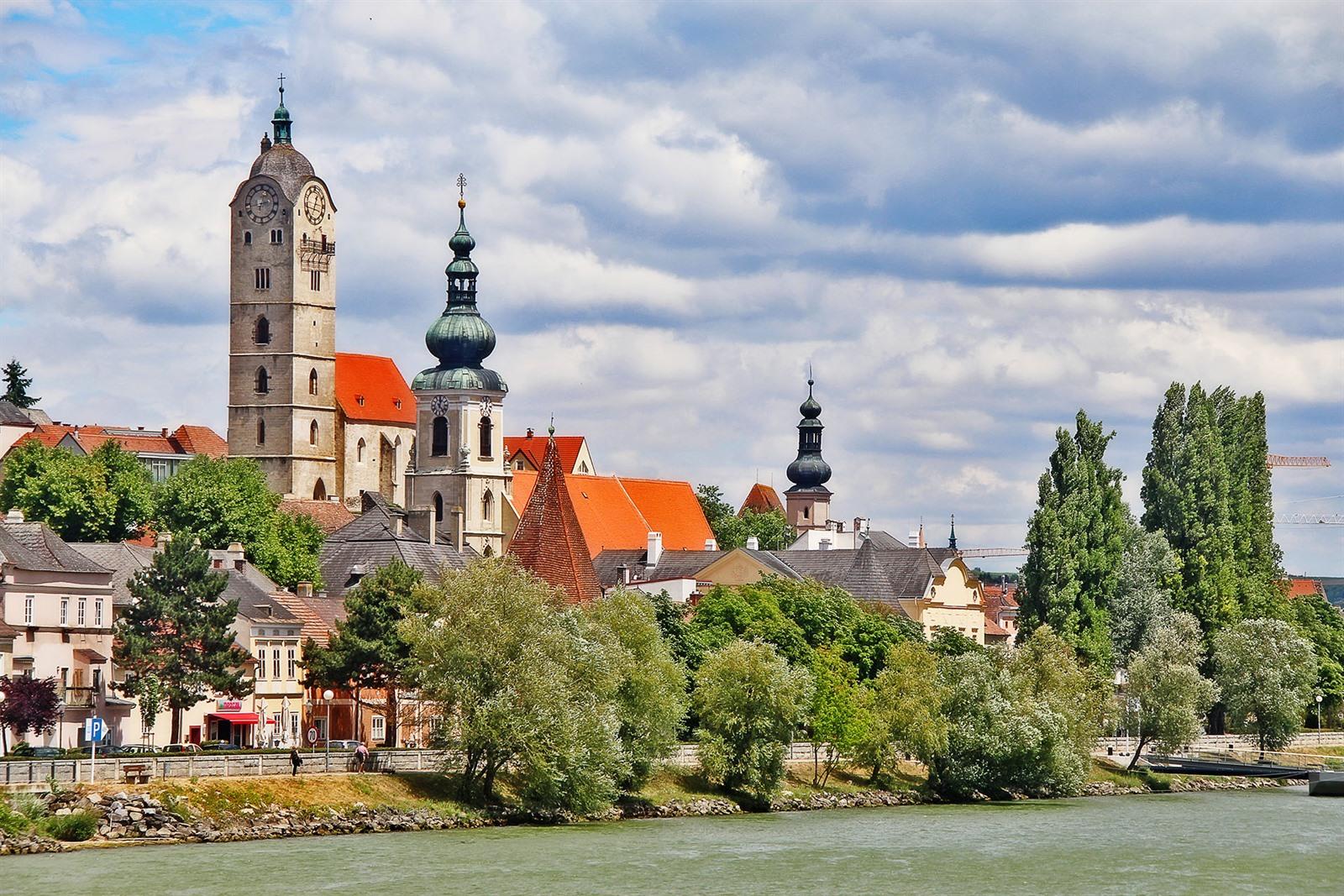
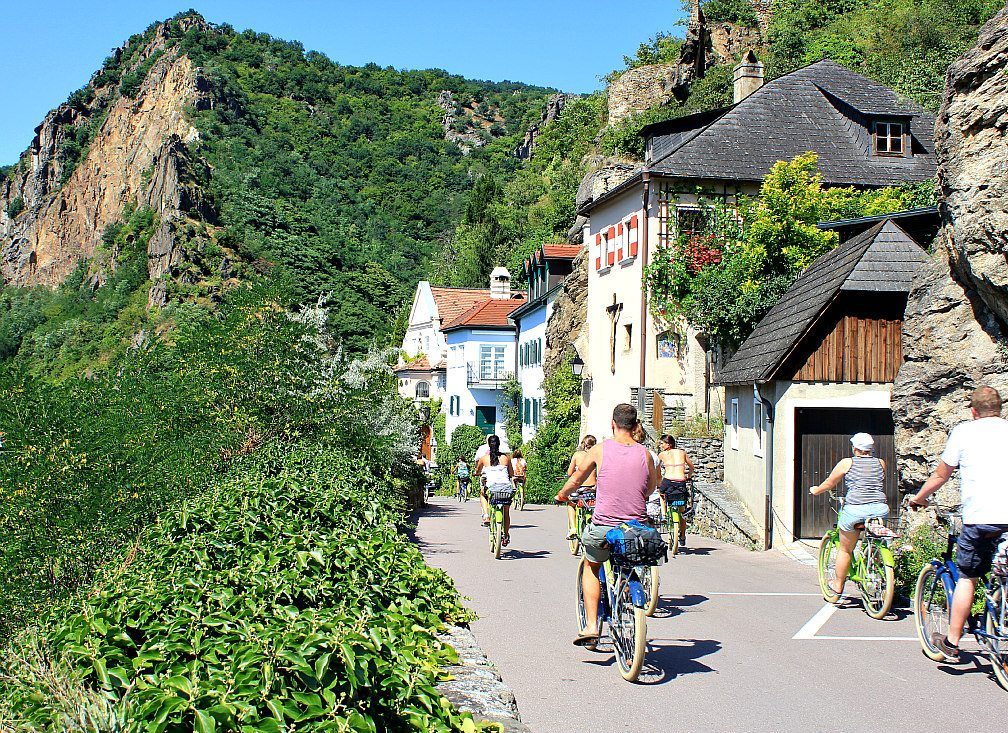
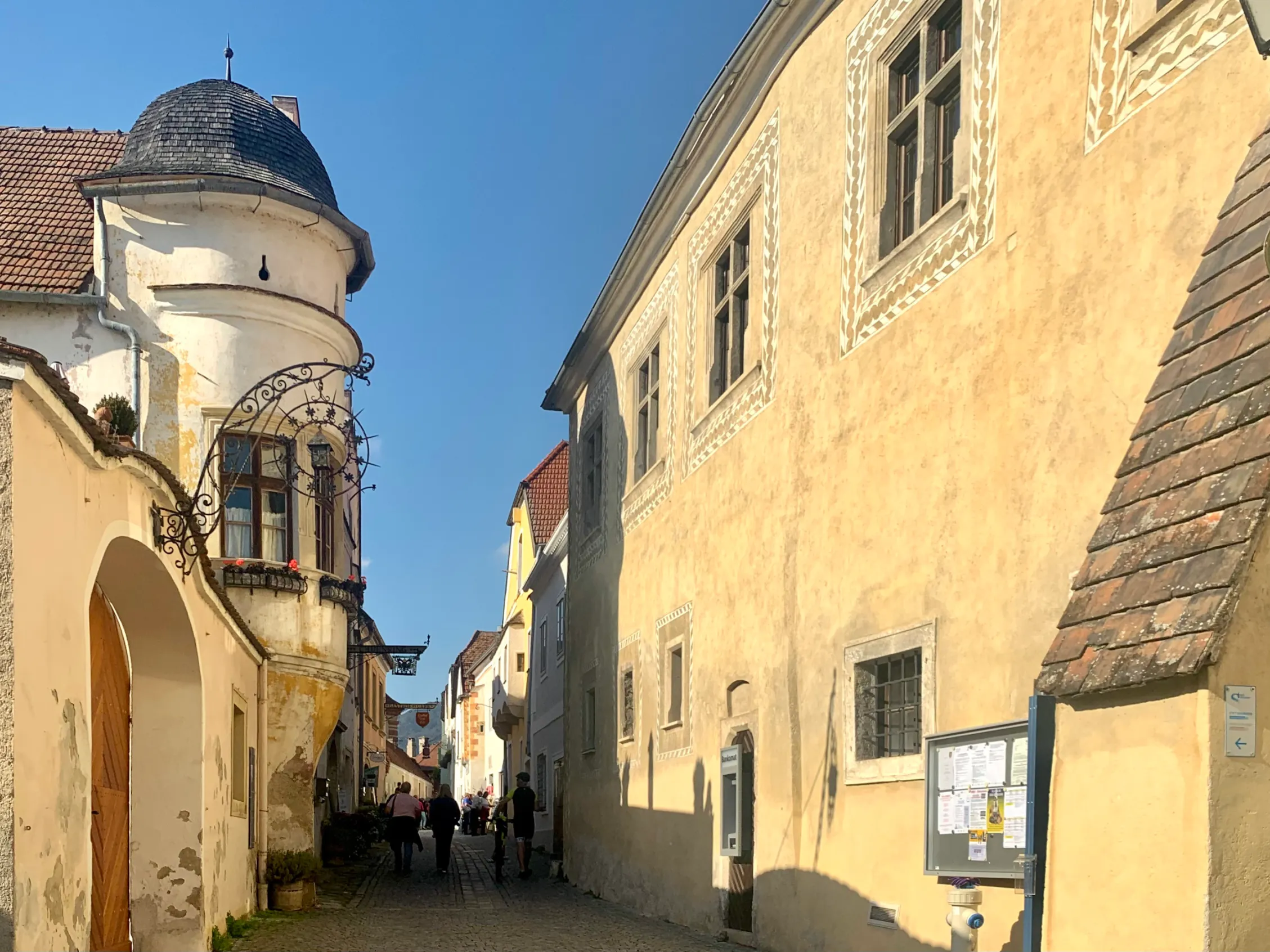
Many villages feature preserved facades and intricate church towers. These landmarks serve as navigation points during your ride.
You collect your e-bike in Melk or Krems at 9:00, adjusting the saddle before rolling onto the Donauradweg's smooth asphalt. The first kilometers pass through flat river meadows where morning mist still clings to the water, then the path tilts upward into Dürnstein.
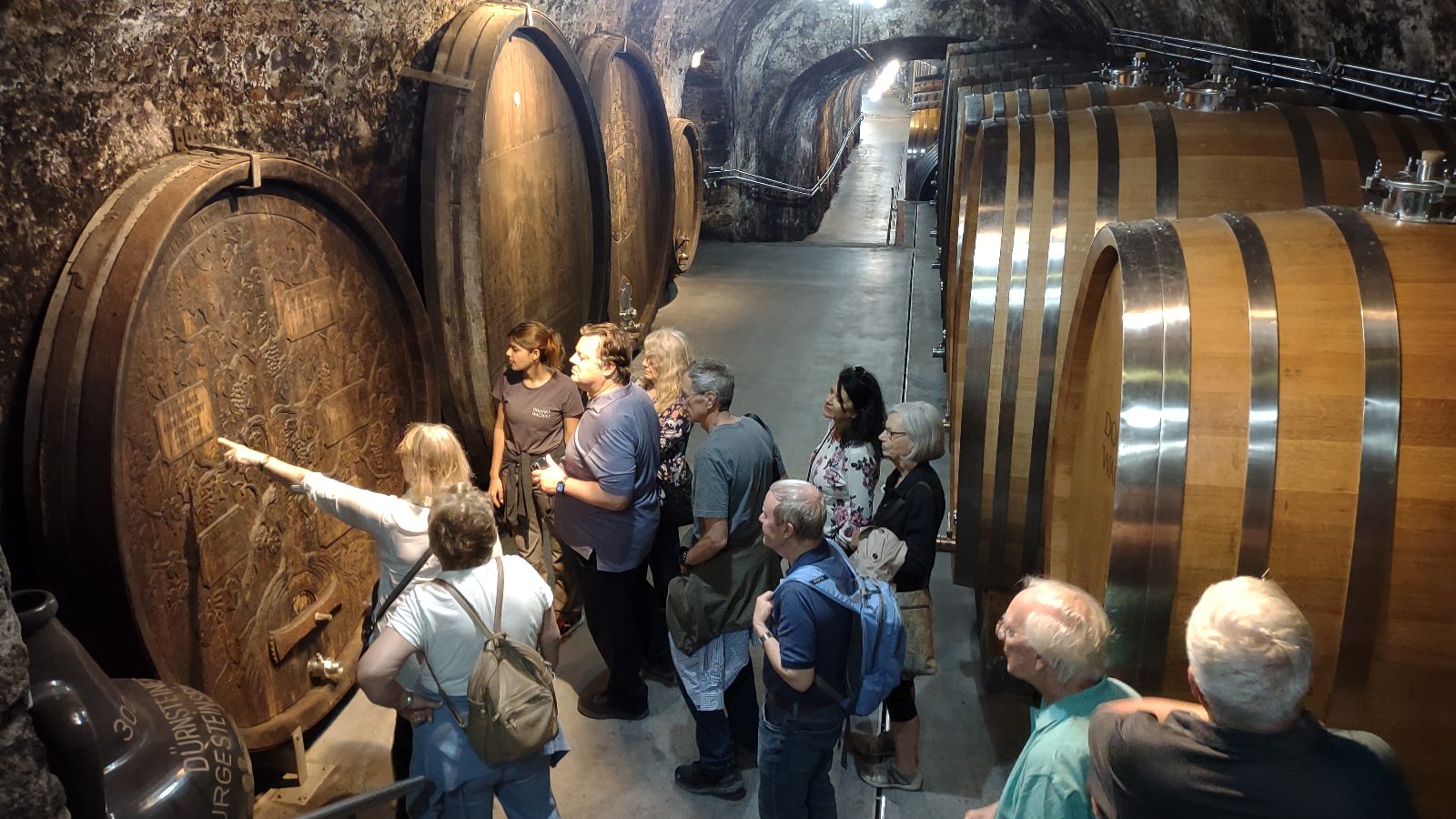
You lock your bike outside a 300-year-old Heuriger and step into a vaulted cellar where the winemaker pours three Grüner Veltliners side by side — federspiel, smaragd, and a late-harvest auslese — explaining how each tier reflects ripeness and alcohol. You taste white pepper in the federspiel, stone fruit in the smaragd.
Back on the path, you pedal west through Weissenkirchen, pausing to photograph the Gothic parish church framed by vine rows climbing the Achleiten vineyard behind it. At a roadside stand in Spitz, you buy a paper cone of warm apricot dumplings dusted with poppy seeds. The return leg follows the river's north bank, where the current moves swiftly past wooded islands. You coast downhill into Krems by 16:00, legs tired, tongue still tingling with Riesling acidity. The Wachau Valley wine tasting bike tour deposits you back where you started, jersey damp with effort, bottle of federspiel in your pannier.
All the details about your upcoming adventure in one place
The Wachau Valley produces 40 percent of Austria's Grüner Veltliner on just 3.5 percent of the nation's vineyard land, a density made possible by south-facing terraces that concentrate sunlight onto Riesling and Veltliner vines clinging to stone walls above the Danube.
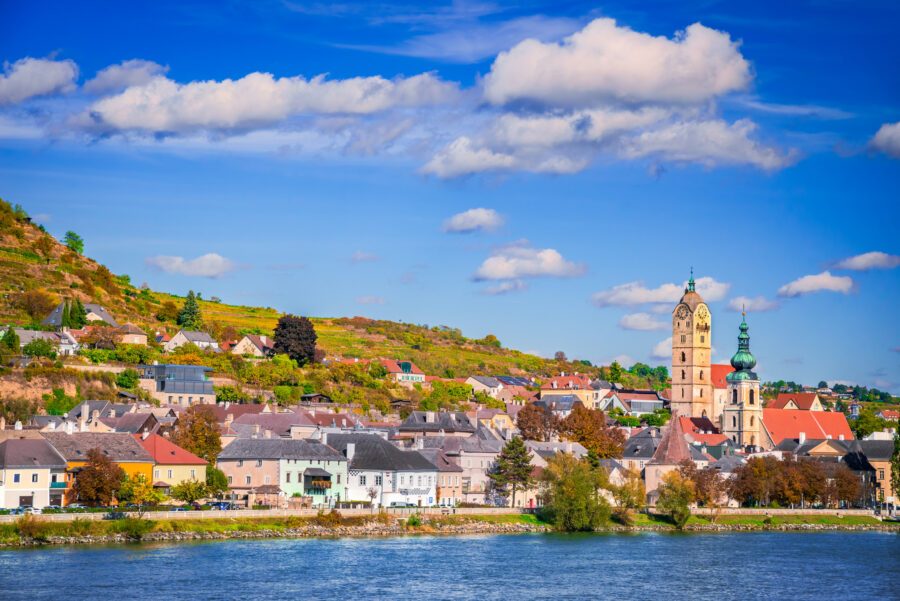
UNESCO inscribed the 36-kilometer stretch between Melk and Krems in 2000, recognizing a wine landscape shaped by Benedictine monks who cleared slopes in the 11th century and Danube boatmen who traded casks downriver to Vienna. The region's thermal inversion — warm air rising from the river meeting cool alpine drafts — creates diurnal temperature swings that preserve acidity in grapes, yielding wines with mineral tension and citrus brightness.
Today, more than 900 independent growers farm parcels averaging two hectares, many still hand-harvesting on gradients too steep for machinery. The Wachau Valley wine tasting bike tour routes follow the Donauradweg, a paved cycle path threading apricot orchards, medieval hamlets, and 14th-century parish churches whose onion domes punctuate the skyline. Dürnstein's cobalt Stiftskirche tower marks the village where Richard the Lionheart was imprisoned in 1192; its cellar doors open directly onto the main square, allowing cyclists to lean their bikes against limestone walls and step into vaulted tasting rooms where winemakers pour single-vineyard Smaragd — the Wachau's designation for wines from fully ripe grapes, named after the green lizards sunning on terrace walls.
The valley's architecture reflects functional necessity: the Kellergasse — sunken cellar lanes — burrow into hillsides to maintain stable temperatures year-round, their arched stone entries marked by wrought-iron signs bearing family crests unchanged since the 18th century. Cycling past these lanes in autumn, you see grape pickers descending with plastic crates, their voices echoing off sandstone cliffs that rise 400 meters above the water. The Danube itself bends sharply at Spitz, creating a natural amphitheater where vineyards climb in terraced tiers, each row aligned to maximize exposure during the short growing season that ends in late October when the first snow dusts the Bohemian massif to the north.
UNESCO inscribed the 36-kilometer stretch between Melk and Krems in 2000, recognizing a wine landscape shaped by Benedictine monks who cleared slopes in the 11th century.
Wear breathable athletic clothing suitable for cycling and comfortable, closed-toe footwear. Bringing a windbreaker is recommended for changing conditions during your wachau valley wine tasting bike tour.
Participants should carry compact cycling backpacks to keep hands free. Security for personal bicycles or rental equipment is the responsibility of the visitor.
Photography is permitted along all public paths throughout the region. Capturing the river landscape during a wachau valley wine tasting bike tour is popular with visitors.
The region is suitable for active families, though wine tasting portions of the wachau valley wine tasting bike tour are strictly for adults. Parents should ensure children are confident riders for shared path segments.
The Danube cycle path is generally flat and paved, making it accessible for casual cyclists. Some historical vineyard paths may feature gravel or incline, impacting accessibility for a wachau valley wine tasting bike tour.
Cyclists may bring their own snacks and water. Local heuriger wine taverns offer traditional refreshments, but these are independent establishments not part of the standard wachau valley wine tasting bike tour tickets.
Operating Hours
00:00–23:59
Address
Wachau Valley, Lower Austria, Austria
Region Type
Public trails and paths
Arrival
09:00–11:00
Storage
Not available at public trailheads
Navigation
Official site: https://www.wachau.at
Public transport · 1:30 · Varies by ticket
Regional trains run frequently from Vienna to Melk or Krems.
Bike · Unlimited · 0 EUR
Utilize the well-marked Danube cycle path connecting all major towns.
Cancellations depend on the specific operator booking terms. There is a 0 EUR entrance fee to public trails and the Wachau Valley region.
Recommended time
Full day (6–8 hours)
A well-paced wachau valley wine tasting bike tour requires a full day to combine riverside cycling with stops at local vintners. We recommend starting early to navigate the cycling paths before the afternoon ferry traffic increases, ensuring you have enough time for vineyard visits and leisure. You do not need wachau valley wine tasting bike tour tickets for public trails, though booking specific tasting experiences in advance is recommended to ensure availability.
Crowd levels through the day
Weather · crowds · average price — dots go green to amber to red as each metric rises.
April to June features blooming apricot orchards and mild temperatures.
July to August offers long daylight hours ideal for a wachau valley wine tasting bike tour.
September to October provides vibrant foliage and active grape harvest activities.
November to March is less suited for cycling due to cold temperatures and limited tavern hours.
Carry sufficient water, as segments between villages can be rural. Many stations do not have refill points.
Benedictine monks from Melk Abbey established the first documented vineyards along the Danube terraces in 1120, cultivating Grüner Veltliner and Riesling on south-facing slopes that captured maximum sunlight. The abbey's cellars, hewn into the hillsides, provided stable temperatures for barrel aging, and monastic viticulture manuscripts from 1342 codified pruning schedules still observed by modern vintners. By 1410, the Wachau region supplied the Habsburg court in Vienna, and Emperor Maximilian I declared the valley's Smaragd wines—named for the emerald lizards sunning on stone walls—worthy of imperial tribute. The Napoleonic Wars brought devastation in 1805 when French troops requisitioned entire harvests, and phylloxera blight between 1872 and 1895 destroyed ninety percent of the valley's rootstock. Winemakers grafted European vines onto resistant American rootstock, a painstaking effort that took two decades to restore production levels. In 1983, the Vinea Wachau association formalized the three-tier classification system—Steinfeder, Federspiel, Smaragd—based on must weight and ripeness, anchoring the wachau valley wine tasting bike tour within a framework of regulated quality standards. Cycling routes connecting the cellars emerged in the 1990s when the Danube Cycle Path was paved between Melk and Krems, transforming the valley into a destination for active wine tourism. UNESCO designated the Wachau a World Heritage Cultural Landscape in 2000, recognizing its terraced vineyards, apricot orchards, and medieval architecture as inseparable from viticultural tradition. Today, over two hundred family-run wineries welcome visitors along forty-five kilometers of riverfront trails, where dry-stone walls, baroque church spires, and the same monastic cellars that stored the 1342 harvest frame contemporary wachau valley wine tasting bike tour tours.
Benedictine monks from Melk Abbey plant the first documented Grüner Veltliner and Riesling vines on Danube terraces.
Monastic manuscripts codify pruning and harvest schedules that remain foundational to modern Wachau viticulture.
Wachau wines receive imperial patronage from Habsburg Emperor Maximilian I, elevating regional prestige.
Phylloxera blight destroys ninety percent of vineyard rootstock; grafting onto American rootstock begins.
Vinea Wachau association formalizes the Steinfeder, Federspiel, and Smaragd classification system.
Danube Cycle Path paving between Melk and Krems establishes cycling infrastructure for wine tourism.
UNESCO designates the Wachau a World Heritage Cultural Landscape for its terraced vineyards and monastic heritage.
Over two hundred family-run wineries integrate into guided wachau valley wine tasting bike tour tickets offerings along forty-five kilometers of trails.
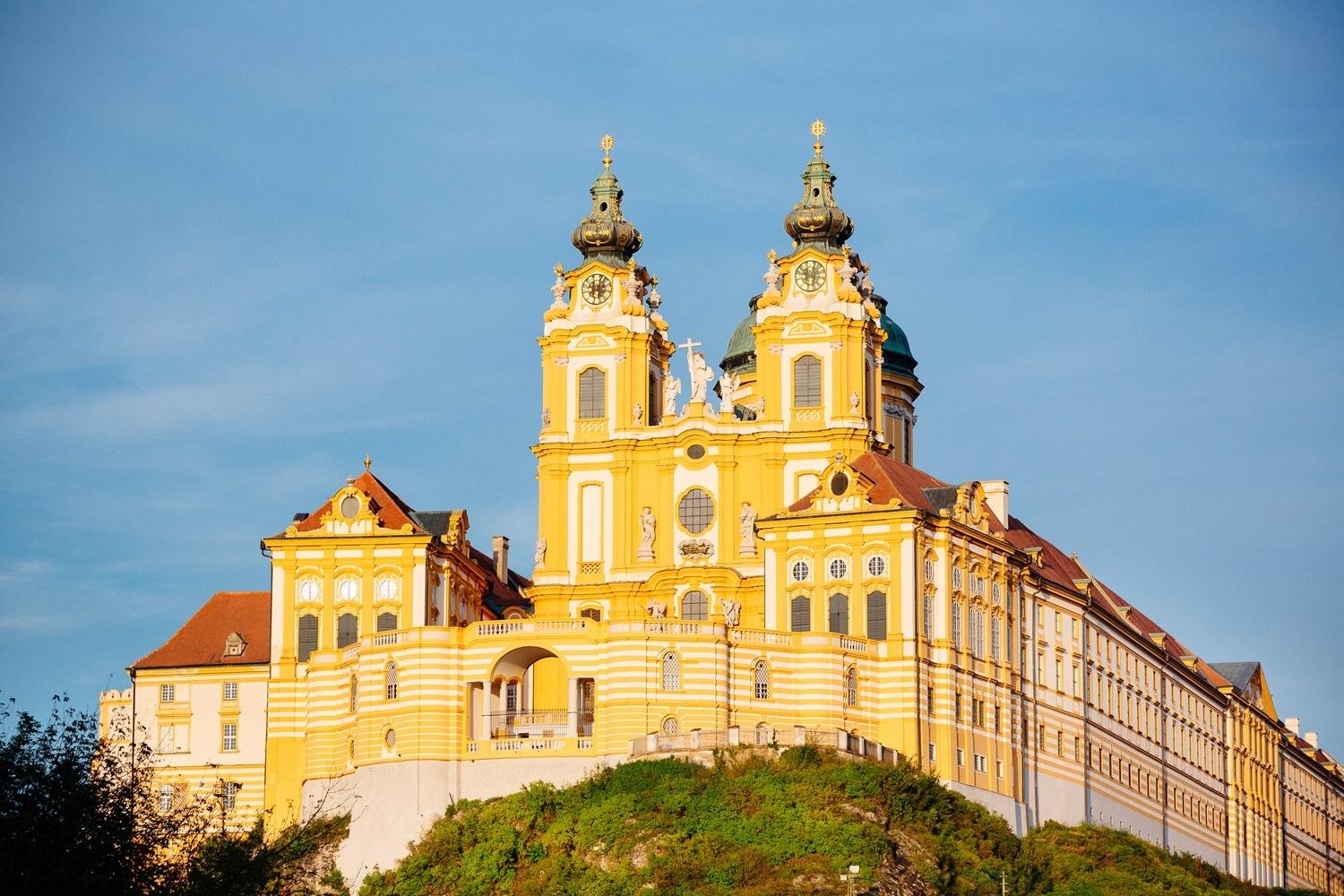
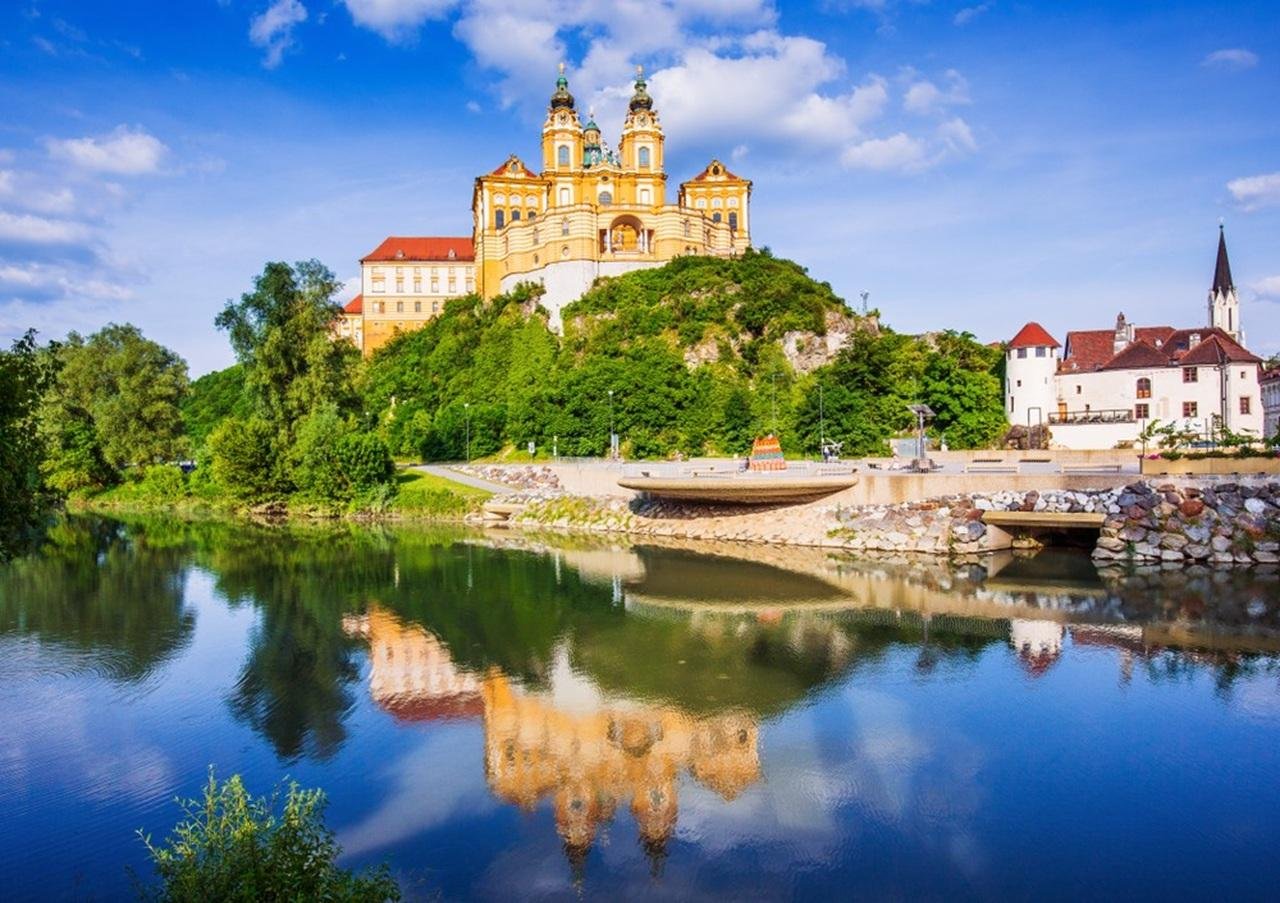
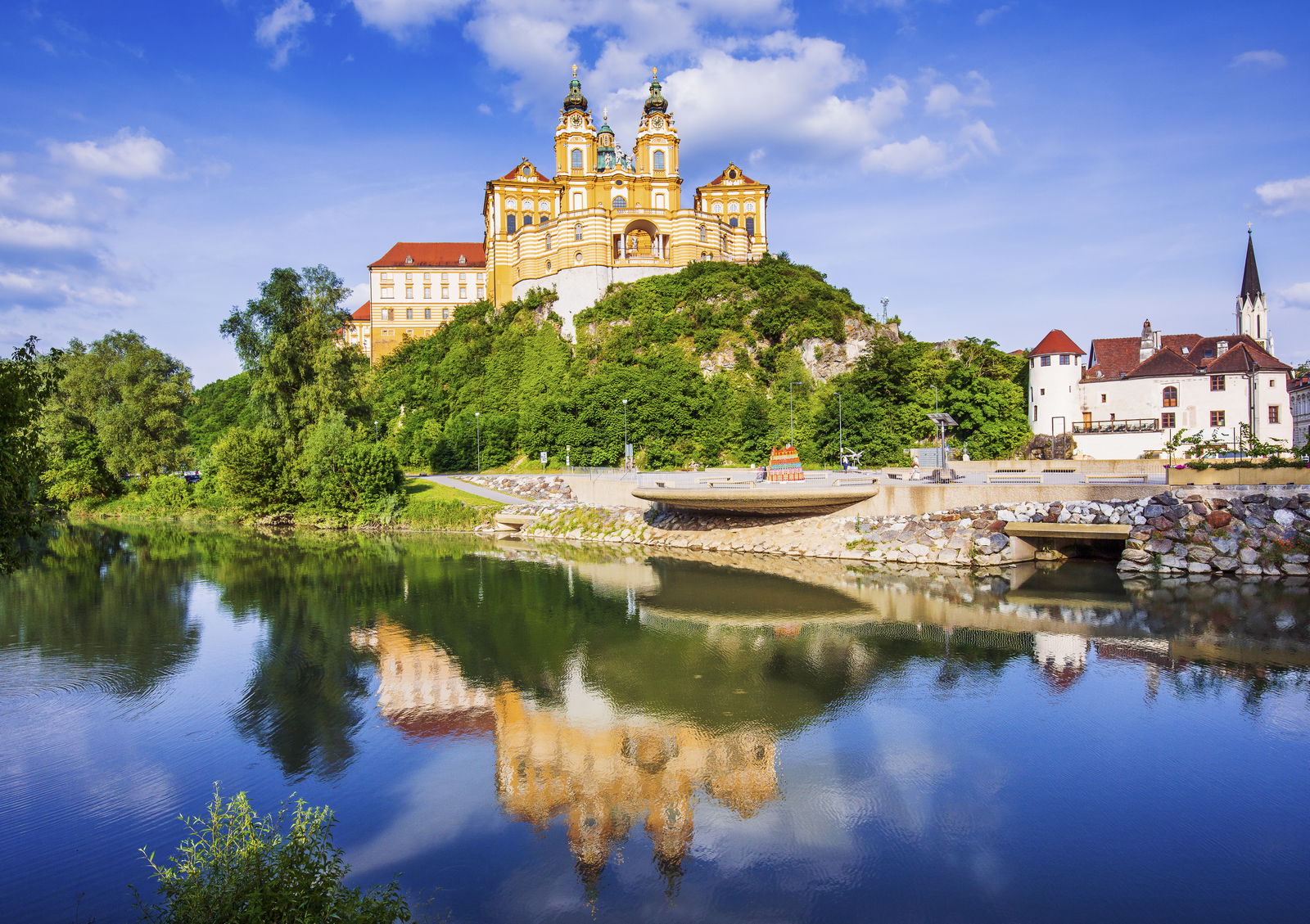
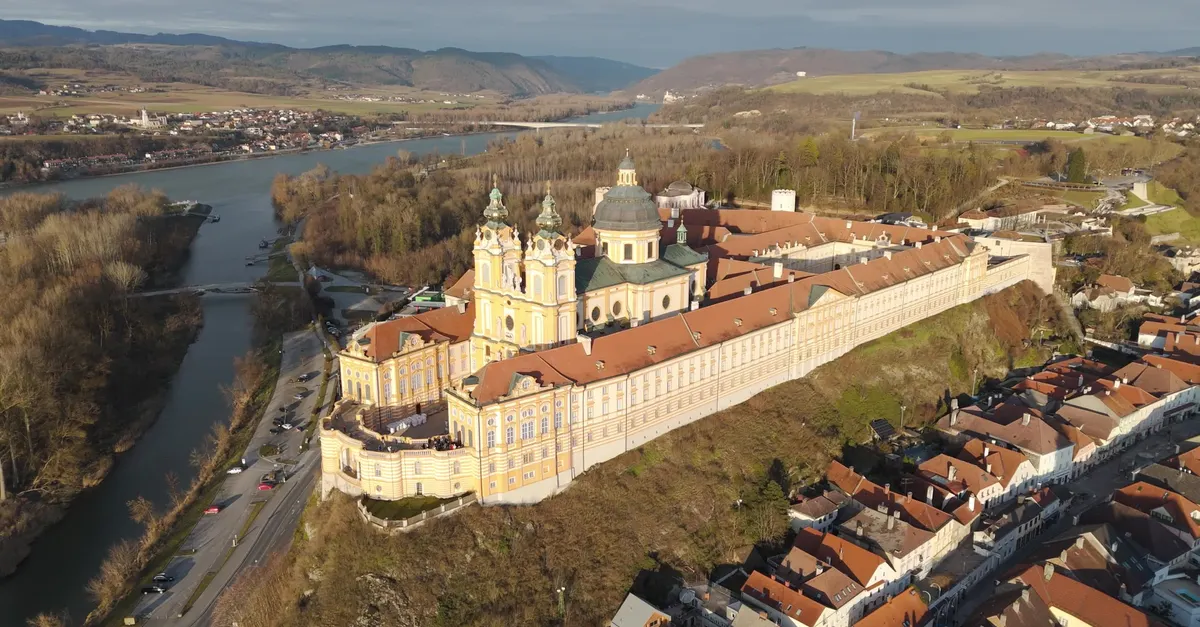
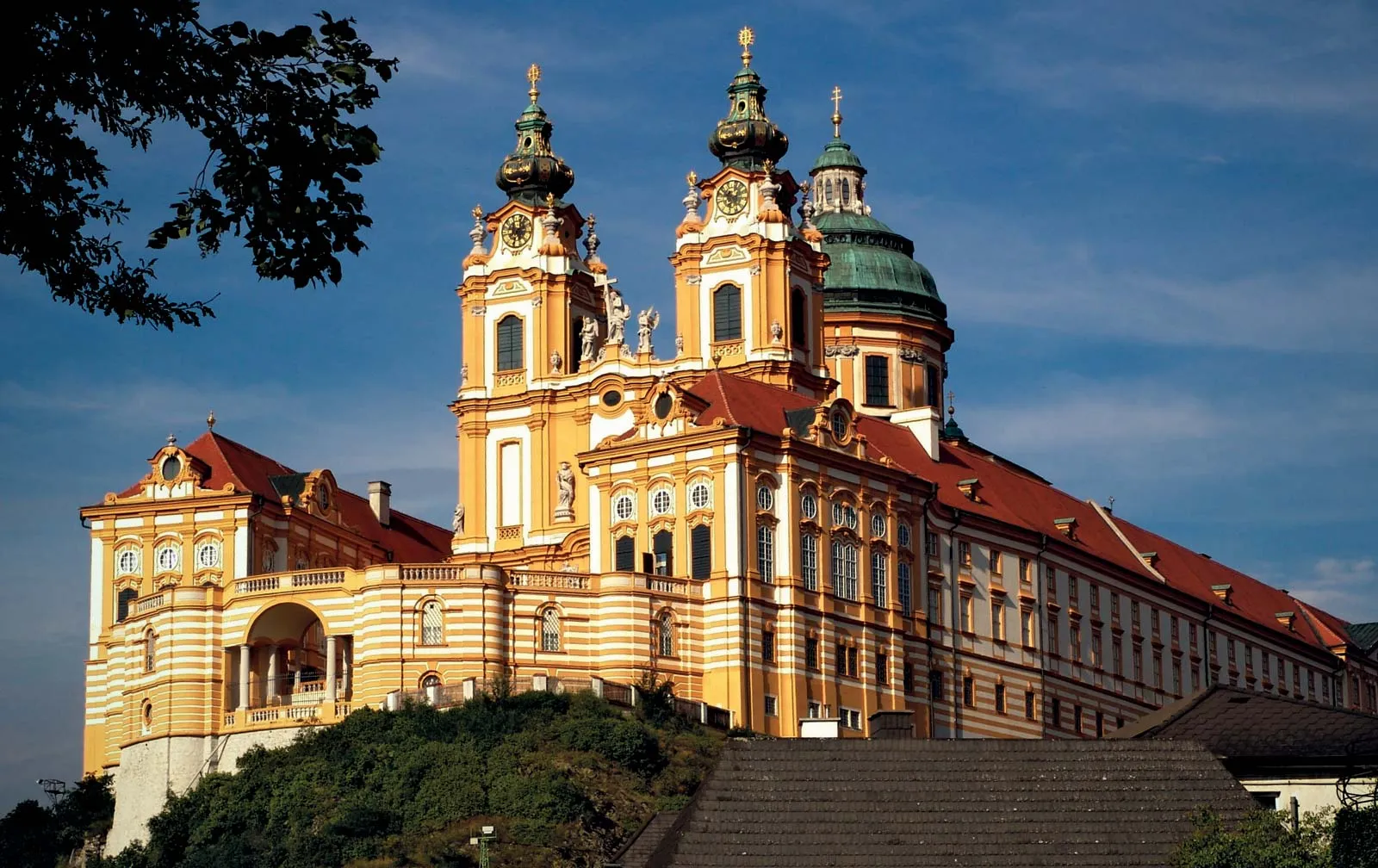
Position your camera at the eastern edge of the abbey courtyard to frame the Danube river winding through the green valley below. This classic angle captures the architectural grandeur of the Baroque monastery against the natural backdrop of your wachau valley wine tasting bike tour.
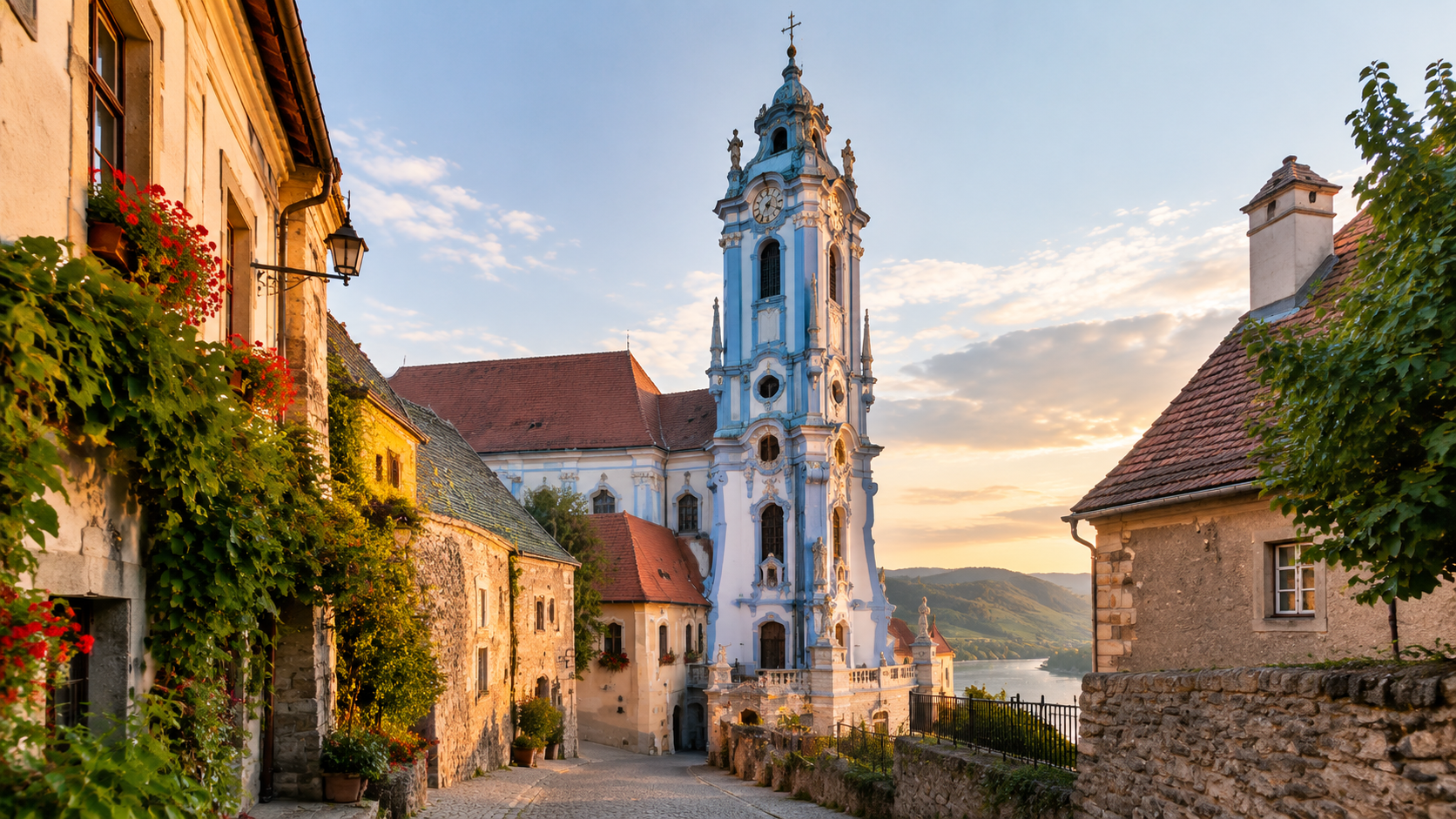
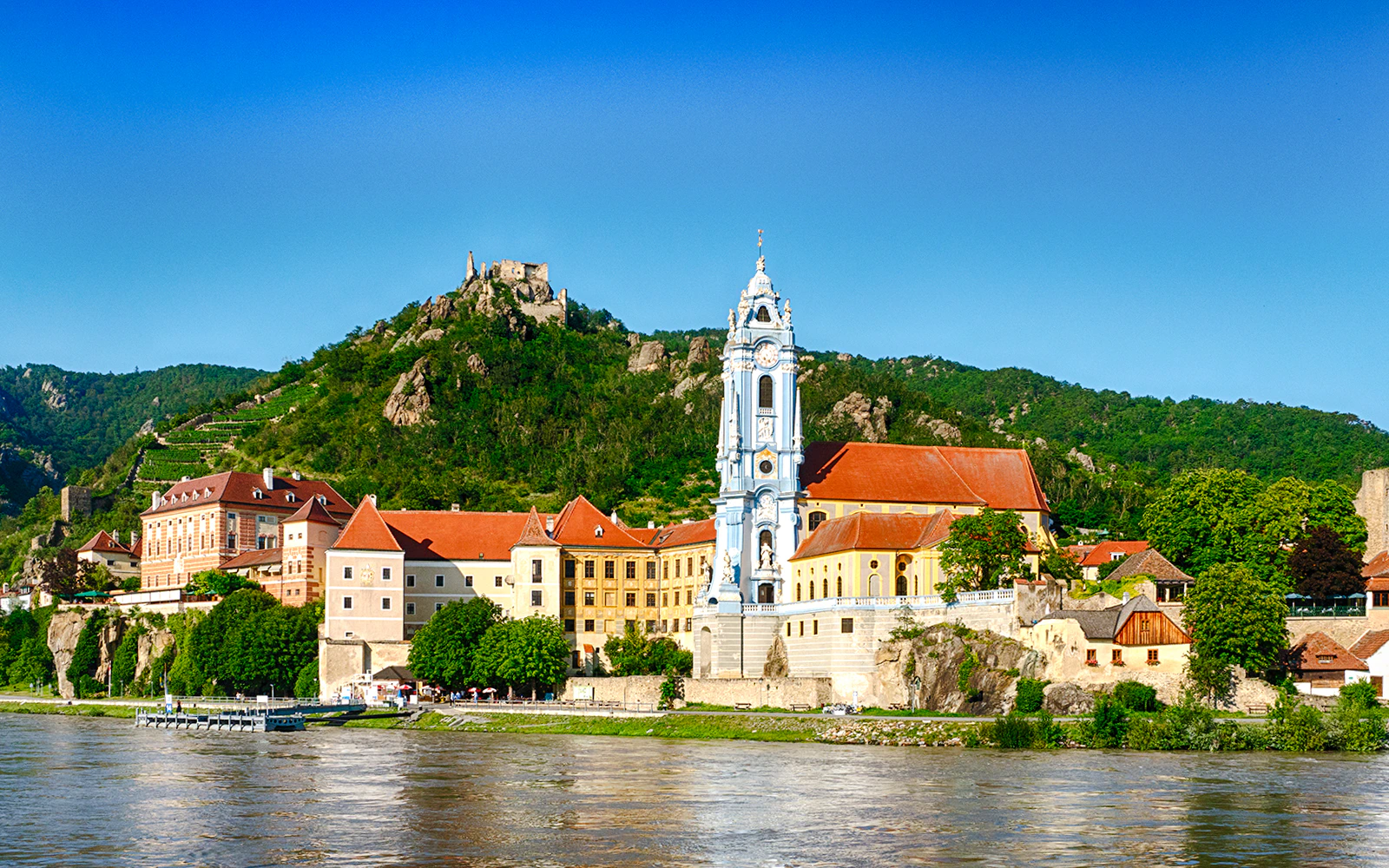
Stand on the main village street looking upward to capture the distinct indigo facade of the Stiftskirche tower framed by narrow cobblestone lanes. This iconic landmark is easily accessible during Wachau Valley cycling routes.
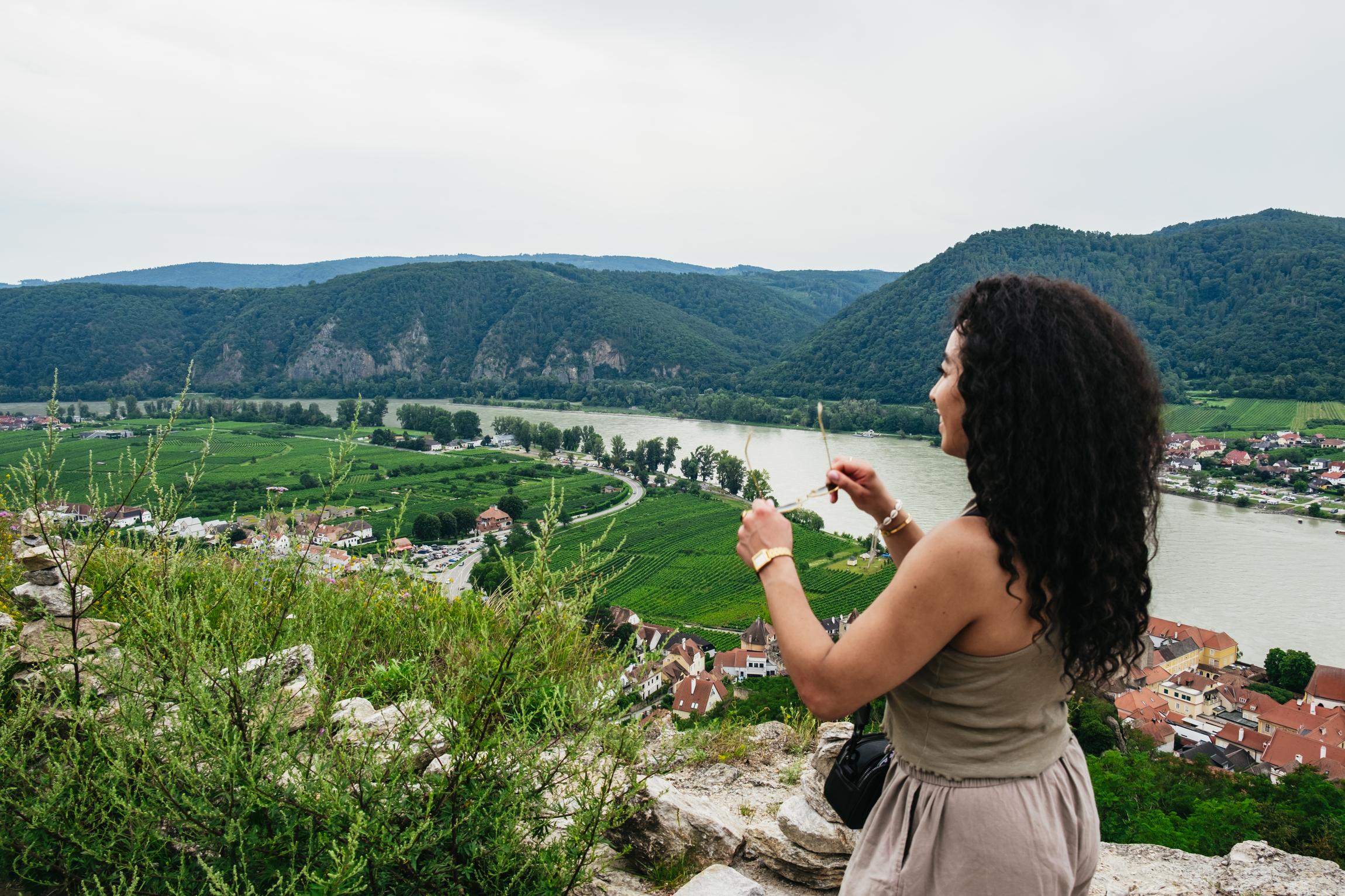
Head to the upper trails overlooking the town of Spitz to photograph the terraced Riesling and Gruner Veltliner slopes. These Wachau Valley wine-growing estates offer clear vistas across the river valley for your Wachau valley wine tasting bike tour tours.
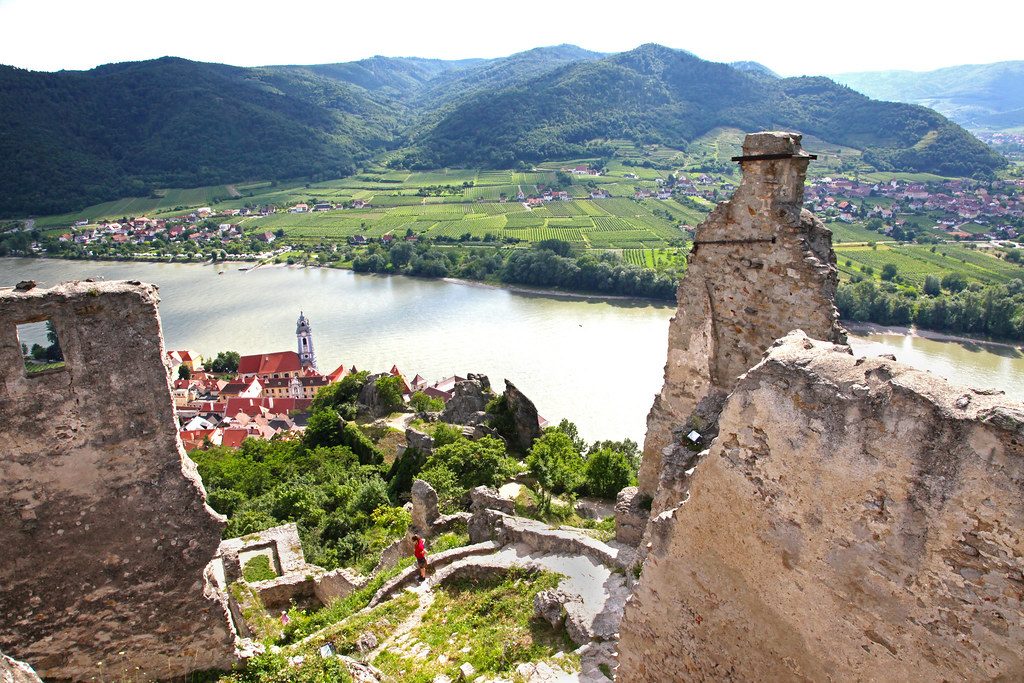
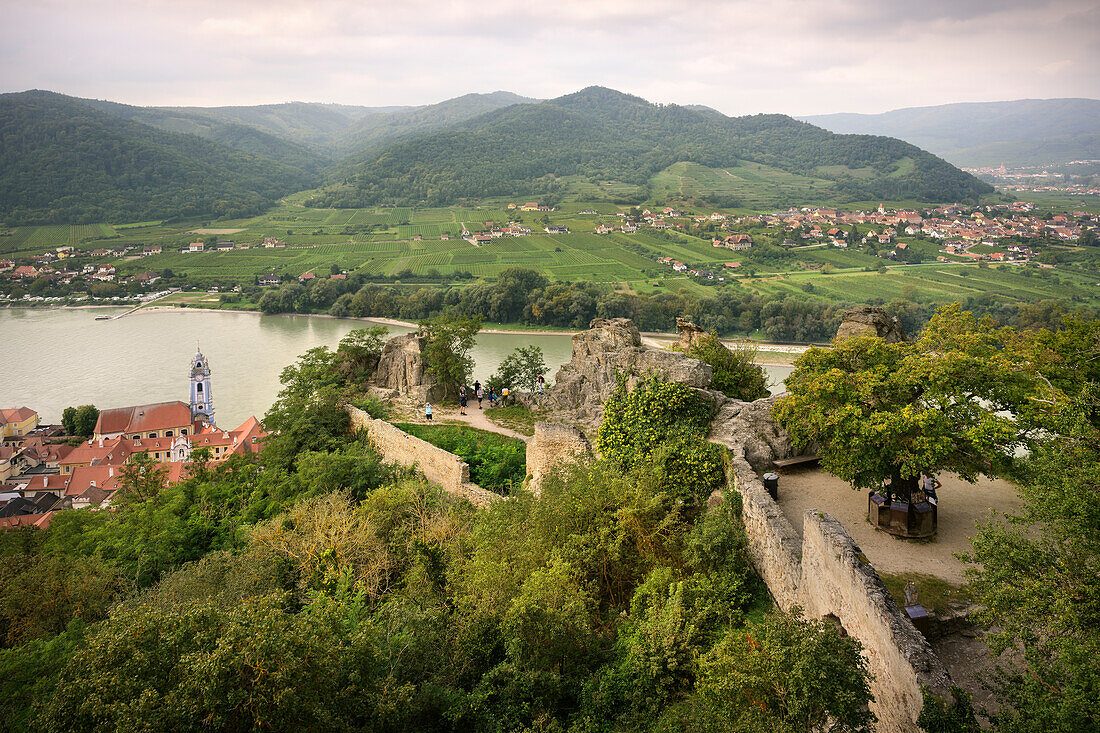
Hike briefly from the village center to these medieval fortress remains for an elevated perspective over the river. It provides a unique vantage point to document your Wachau valley wine tasting bike tour tour without needing special Wachau valley wine tasting bike tour tickets.
Exploring the region via a wachau valley wine tasting bike tour allows families to experience the scenic Danube landscapes at a comfortable pace. Navigating these paths with children requires careful planning, especially when considering the availability of specialized wachau valley wine tasting bike tour tickets for guided excursions.
Standard strollers are manageable on the paved cycle paths, though bike trailers are a more practical choice for younger children during longer rides. Ensure your rental provider offers secure, child-rated attachments before booking your wachau valley wine tasting bike tour tours.
This activity is best suited for children aged six and older who can confidently handle their own bicycles on varied terrain. Younger children may find the distance tiring, so look for a wachau valley wine tasting bike tour tour that provides support vehicles or shortened route options.
Public restrooms are available in most riverfront towns, but changing tables are not standard in every establishment along the trail. Carry all necessary supplies in your panniers to remain self-sufficient between village stops.
Plan for frequent breaks to enjoy the riparian views and local stone fruit orchards along the path. These pauses allow families to maintain a sustainable rhythm without the pressure of a strict schedule.
Pack plenty of hydration and snacks, as the distance between village taverns can vary significantly. While many stops offer grape juice for younger participants, carrying extra water is essential for a safe family cycling experience.
Cyclists exploring the region near a wachau valley wine tasting bike tour will find traditional Heuriger wine taverns tucked into historic villages like Spitz and Dürnstein. These venues offer an authentic setting to pair regional Riesling and Grüner Veltliner with local farm-to-table snacks.
Located in Wösendorf, this historic tavern serves refined regional cuisine alongside estate-grown wines. It is an ideal stop for those seeking a quiet, sit-down meal during their Wachau Valley wine tasting bike tour tours.
Everything you need to know for your journey
The region is open 00:00–23:59 daily, though individual winery hours may vary.
The valley features public trails accessible for any independent wachau valley wine tasting bike tour.
There is a 0 EUR entrance fee to public trails, so no entry tickets are required for the region itself.
The best arrival window for your wachau valley wine tasting bike tour is 09:00–11:00 to avoid crowds.
You may bring snacks, but please dispose of waste properly during your wachau valley wine tasting bike tour.
Yes, photography is permitted throughout the public areas during your wachau valley wine tasting bike tour.
Children are welcome on the paths, but wine tasting is reserved for adults on a wachau valley wine tasting bike tour.
Most tours span several hours depending on your pace along the valley path.
Check your specific operator booking terms for cancellation details regarding your wachau valley wine tasting bike tour.
A historic Benedictine abbey overlooking the Danube River.
Ruins providing an elevated view of the valley.
The iconic baroque tower in Dürnstein village.
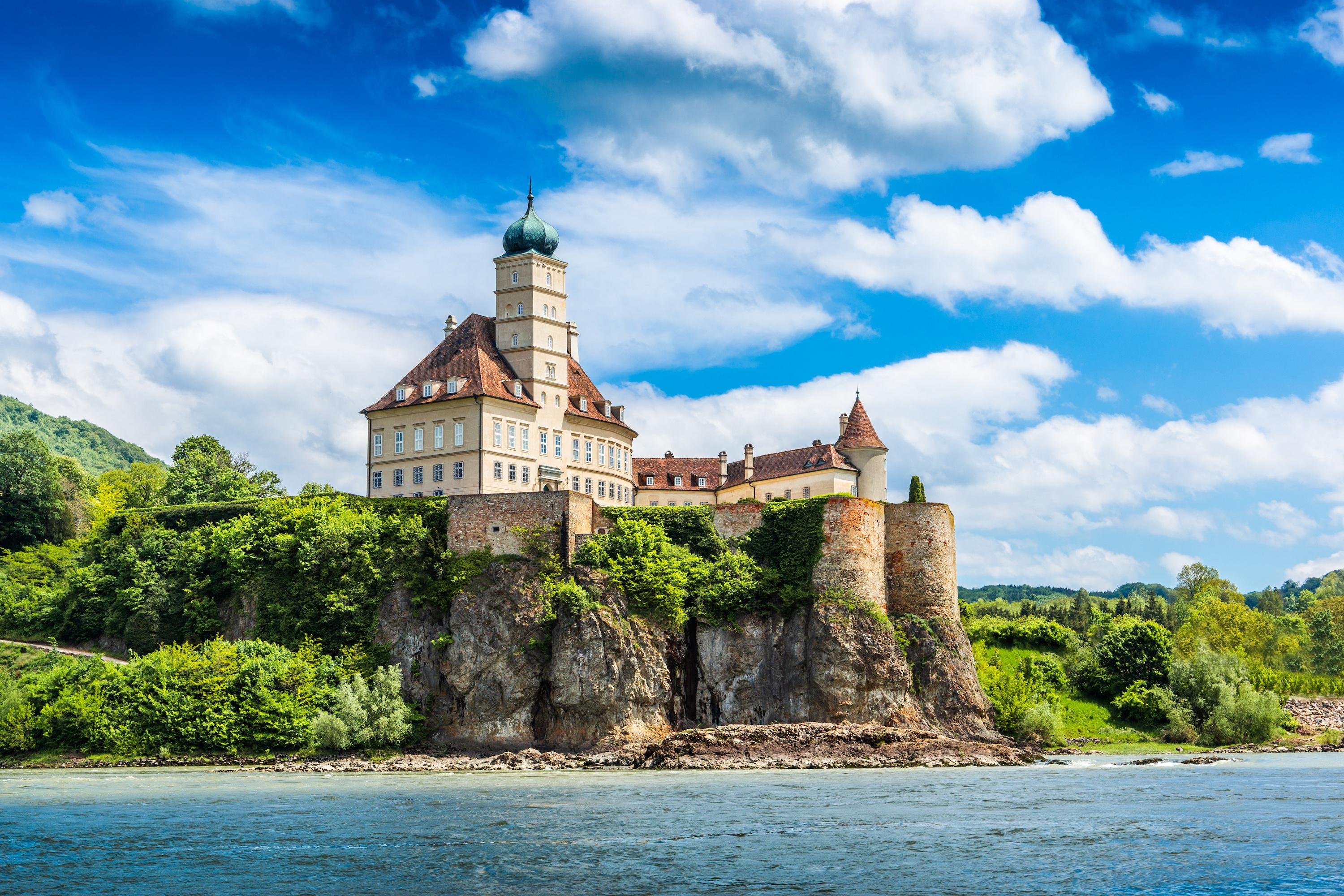
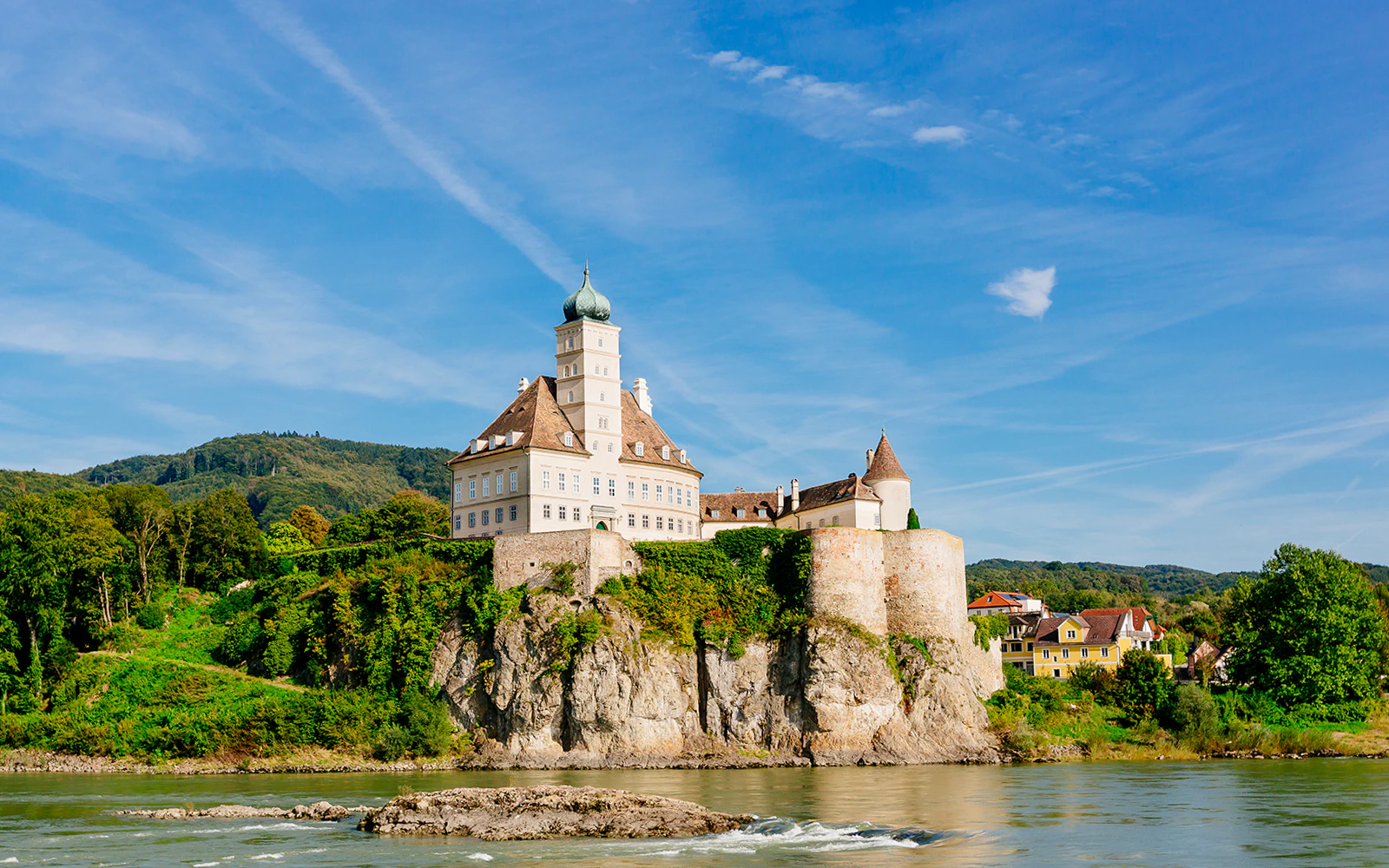
A cliffside castle visible from the cycling path.
Comfortable stays near the start of the route.
High-end lodging integrated into village architecture.
Affordable options for cycle tourists near the finish.
Join thousands of happy travelers who have discovered this incredible experience
Book Your Experience Now